
Categories
Bookkeeping

How to automate invoice coding in accounts payable

what is invoice coding

As businesses expand and operations grow, they often encounter a formidable Accounts Payable Management challenge in the form of scaling. One such challenge that becomes increasingly evident as organisations scale is the intricacy of General Ledger (GL) coding. By following these steps, you can effectively write an invoice code whether you have a purchase order as a reference or need to code an invoice without one.

The Problems with Scaling Manual GL Coding
what is invoice coding

As you consider the path forward for your accounts payable process, remember that automation is not just a tool; it’s a catalyst for efficiency, accuracy, and financial success. It’s the key to unlocking the full potential of your organisation’s financial operations, ensuring that due dates are met, account codes are precise, and your financial journey is smoother than ever before. Invoice codes help categorize expenses, allocate costs to specific cost centres or projects, and facilitate seamless tracking and reporting.

  • In this article, We’ll give you a refresher on how invoice coding works, how to automate coding for PO and non-PO invoices, and the benefits of using invoice processing automation for your AP workflows.
  • This system of coding organizes your financial transactions and makes it possible to properly track expenses, making it more efficient to oversee your financials.
  • Automating invoice coding saves time and money by reducing manual processing, improving payment times (and reducing late payment fees), and preventing fraud and errors.
  • Learn how Ramp’s accounts payable software can help you easily manage everything from invoice intake to coding to payment.
  • This may include aligning with industry standards, meeting customer-specific requirements, or ensuring compliance with local regulations, especially if certain data points are needed for audit trails.
  • Enjoy the ease of keyboard-driven navigation, minimizing unnecessary clicks and maximizing your workspace efficiency.
  • In fact, according to a recent survey by the Institute of Finance and Management (IOFM), efficient invoice coding can reduce error rates by up to 40%.

Account

what is invoice coding

In this guide, we’ll explain what invoice coding is, why it’s essential for AP accuracy, and how automation and AI are helping finance teams streamline the process. You’ll also learn about common challenges, practical examples, and how modern solutions are reshaping invoice workflows. Adopting these best practices strengthens your financial operations by enhancing accuracy, consistency, and efficiency. Well-executed invoice coding creates a solid foundation for financial reporting and empowers your team to make informed business decisions. Enterprise organizations build complex coding structures supporting multiple entities, currencies, and compliance needs. For example, a multinational manufacturer may use entity codes, regional identifiers, product lines, and compliance markers.

what is invoice coding

What is Automated Invoice Processing?

This minimizes manual entry, improves accuracy, and accelerates invoice approvals by aligning with pre-approved spend categories—a valuable advantage for high-volume AP teams working within rules-based workflows. Commonly used in larger organizations, multi-dimensional coding allows AP teams to apply multiple attributes to a single invoice, such as GL account, department, business unit, region, and project code. This method supports highly granular reporting, cross-functional spend analysis, and compliance with complex internal financial structures, especially in global or multi-entity environments.

Invoice coding is the process of adding information to an invoice using a system of unique codes. The codes connect the invoice items to the appropriate expenses in your company’s financial records. For example, if your company buys a box of pencils, the invoice for stationery can accounting be assigned with the general ledger (GL) code. AP automation software uses AI technology to code invoices automatically, reducing invoice processing costs, improving accuracy, and reducing hiring needs.

  • Start with a pilot run using a subset of invoices, gradually increasing volume as you gain confidence.
  • General ledger coding allows businesses to easily track recurring expenses, by assigning a number or code for each type of expense.
  • Solutions like Stampli can also synchronize your GL code, vendor ID, and distribution lists to ensure accurate invoice coding.
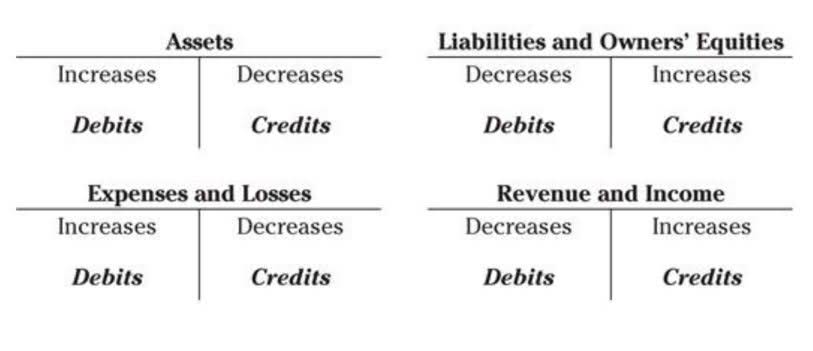
  • When paying invoices for accounts payable purchases on invoices with credit terms, debit the accounts payable account for amounts that were originally recorded for the invoices being paid.
  • You can also set up mandatory reviews or assign reviewers only if certain conditions are met.
  • They become better at invoice data extraction, invoice coding, and approval routing.

what is invoice coding

With a GL coding system, one can quickly analyze and report data by looking up a GL code what is invoice coding and every transaction meeting those parameters will instantly be available. This will help your company make informed decisions on leading your business to success. For example, you might create a rule to route invoices over a certain amount to a senior finance manager, while standard invoices go to the AP team.


Categories
Bookkeeping

Regulatory Requirements vs Statutory Requirements What’s the Difference?

statutory reporting requirements for businesses

These reserves are essential to prevent insolvency and ensure that policyholders receive their benefits. Insurance companies must maintain reserves for supplementary contracts, such as paying dividends to policyowners or Financial Forecasting For Startups beneficiaries. Instead, they may choose to withdraw interest or principal plus interest over time, which is based on supplementary contracts. Gabriel Freitas is an AI Engineer with a solid experience in software development, machine learning algorithms, and generative AI, including large language models’ (LLMs) applications. Graduated in Electrical Engineering at the University of São Paulo, he is currently pursuing an MSc in Computer Engineering at the University of Campinas, specializing in machine learning topics.

Local Government Unit ( LGU)

  • However, these unrealized gains or losses won’t affect reported income, only realized capital gains or losses will.
  • This approach not only satisfies regulatory demands but also aligns with stakeholder values and expectations, fostering trust and sustainable growth.
  • It is necessary to be familiar with the most recent methods of statutory reporting in order to maintain compliance with international regulations.
  • Its functions and services contribute to the smooth functioning of the business environment, promoting trust and confidence in the corporate sector.
  • Streamline your workflow with automated formatting and review processes, and maintain consistency with centralised data management.
  • Vaia is a globally recognized educational technology company, offering a holistic learning platform designed for students of all ages and educational levels.

These actions can compel companies to dedicate additional resources to legal defense, diverting attention from core business operations and adversely affecting growth prospects. Balance sheets, income statements, cash flow statements, shareholder equity statements, footnotes describing the organization’s accounting principles, and notes on related party transactions are examples of statutory reports. You can make sure your company stays in compliance with legal obligations while maximizing your financial operations by comprehending the subtleties of statutory reporting and putting into place practical solutions. A business’s structure influences its accounting approach, compliance requirements, and financial reporting obligations.

Conclusion and Resources

  • The emphasis on transparency is not only to foster a robust business climate but also to protect stakeholder interests.
  • Moreover, establishing connections with local chambers of commerce can provide invaluable support and resources tailored to specific industries and regions, enhancing compliance efforts.
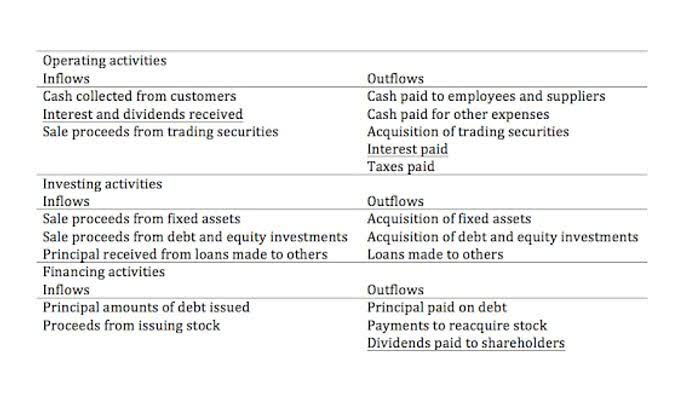
  • Lastly, the cash flow statement tracks cash inflows and outflows, highlighting the company’s liquidity and financial flexibility.
  • Overall, proficient operational disclosure practices are not only beneficial for regulatory compliance but also serve as a testament to a company’s integrity and commitment to responsible corporate governance.
  • Companies that take these factors into account can benefit from increased automation-related efficiency improvements and enhanced risk management for global regulatory compliance.

You should document your compliance with internal requirements closely with company records. You might need them when you decide to sell your business or if a legal action is taken against your business. You may also become personally liable for debt when declared bankrupt, even if the legal structure of your business would normally prevent this. Starting a corporation in the Philippines is the first step in establishing continuous and smooth operations. Like most other countries, the Securities and Exchange Commission (SEC) of the Philippines demands frequent monitoring and reporting of every company’s annual activity. The Bureau of Internal Revenue (BIR) and municipal government also require regular reporting and renewal of certificates and licences.

How ESG-embedded statutory reporting solutions can protect your business

Many companies find themselves allocating a significant portion of their budgets to compliance activities, which can detract from investment in core business operations. This competition for resources can hinder a company’s ability to adapt quickly to new regulations or enhance their reporting processes. Compliance and reporting requirements in South Africa present numerous challenges for companies across various sectors.

statutory reporting requirements for businesses

Statutory reports may seem complex, but they are essential for maintaining financial transparency and compliance. By understanding their components, purpose, and regulatory context, you can navigate them with confidence. Whether you’re preparing these reports or analyzing them, the key is to approach them methodically and seek clarity when needed. Organizations can assure compliance while reducing costs by comprehending the complexity of statutory reporting and proactively implementing ways to streamline the process. A crucial component of this effort is utilizing technology; let’s look at how it may be applied to further optimize your regulatory reporting procedures. The introduction gives a general overview of the significance and difficulty of statutory reporting, which is further discussed in the heading after that.

statutory reporting requirements for businesses

This approach prevents insurers from artificially manipulating their reserve requirements by selling securities at the right time. In fact, insurance companies must also establish reserves for unpaid claims, which can include claims that were not yet paid and some insureds who have already died but were not reported yet. The old formulaic approach required frequent updates as new insurance products contra asset account were introduced. This approach was sometimes too conservative in calculating reserves, while in other cases, it did not account for additional risks of certain products. The company reports profits when earned and expenses when incurred, which can lead to unexpected losses when business is increasing and profits when business is decreasing.

statutory reporting requirements for businesses

When submitting their documents for assessment, businesses must also follow any further guidelines issued by regulatory bodies. In the context of operating a business in Germany, adherence to financial reporting and compliance requirements is of paramount importance. These regulations serve as the foundation for maintaining transparency, accountability, and trust amongst stakeholders, including investors, clients, and regulatory authorities. Failure to comply can result in significant penalties and reputational damage, underscoring the necessity for businesses to be well-informed about these obligations. Through proper understanding and implementation of these requirements, companies can not only avoid potential legal issues but also foster sustainable growth and financial health. Financial audits play a critical role in ensuring that companies in Germany adhere to the stringent financial reporting and compliance requirements set forth by national and European regulations.

Services and information

  • Statutory accounting principles are often confused with Generally Accepted Accounting Principles (GAAP) and International Financial Reporting Standards (IFRS).
  • This proactive stance can cultivate stronger brand loyalty and risk management by preemptively addressing stakeholder concerns.
  • Ultimately, the consequences of non-compliance with financial reporting requirements extend beyond mere monetary penalties.
  • Compliance with this Act is vital, as failure to adhere to tax regulations can result in severe penalties, including fines and legal repercussions.
  • As a bonus, some applications provide capabilities like audit trails or integrated workflow management that make it simpler to monitor changes over time and guarantee correctness for all regulatory filings.
  • It also outlines the process of appointing directors and their responsibilities towards the company and its stakeholders.
  • These regulations serve as vigilant guardians, ensuring that organizations remain in good standing with governing authorities.

While SAP focuses on ensuring regulatory compliance and financial solvency, GAAP strives to provide investors and other stakeholders with a comprehensive view of an organization’s financial health. Businesses must comply with statutory accounting principles to maintain their licenses and operate within their jurisdictions. This is particularly crucial for organizations that are publicly traded or regulated by government agencies. Organisations with centralised statutory financial reporting models, enabled by greater automation and intelligent data management, are better prepared for ongoing challenges and new opportunities. To effectively comprehend reporting requirements, businesses and learners alike must employ suitable techniques.

statutory reporting requirements for businesses

Accurate data collection can be challenging, as it requires precision and attention to detail. Additionally, the ever-changing statutory reporting nature of statutory regulations demands ongoing efforts to stay compliant. For example, publicly traded companies must file quarterly statements as well as an annual statement. A vision is important, of course, but so is a plan—and that may be lacking for many companies. A recent BDO study found that only 20% of MNEs surveyed had a dedicated tax technology strategy to support key business objectives.

Categories
Bookkeeping

Free Excel Bookkeeping Templates

how to use excel for accounting and bookkeeping

Whether you’re looking for onboarding and product training, financial coaching, clean books for tax time, or full-service bookkeeping, our experts have your back. First, download a free invoice template for Excel, or get one for Google Sheets. Copy and paste the data from the invoice template you downloaded into the new sheet. Bench simplifies your small business accounting by combining intuitive software that automates the busywork with real, professional human support. To normal balance start with Excel, I recommend familiarizing yourself with the interface and basic functions. Learn to enter data, format cells, and use simple formulas like SUM and AVERAGE.

  • These tools organize data, highlight important information, and create summaries automatically.
  • The liability account is named after that business if you’d purchased on credit 100 in raw materials needed to make your products from another business.
  • When it purchases inventory, it debits the Inventory account and credits the Accounts Payable account.
  • Customise QuickBooks with a variety of apps including eCommerce, time tracking, inventory management, and payment processing.
  • Start a new worksheet if this is your method of accounting and enter column headers for the date, transaction description, and a transaction number.
  • I drag the fill handle (small square in the bottom-right corner of a selected cell) to extend patterns in adjacent cells.

What are the Related Courses and Blogs Provided by The Knowledge Academy?

Balances are calculated automatically with built-in formulas so all you have to do is enter how much you earned or spent and the expected bank balance is calculated for you! You can then perform a bank reconciliation within the cashbook to make sure the cashbook reconciles with your bank balance. Excel is a fantastic spread sheeting program and if you already have it on your computer, you already have the means to start your bookkeeping. You can also use a free version of Excel by opening a Microsoft account. QuickBooks Online Accountant isn’t just a portal to your client’s books—it’s the one place to grow and manage your entire practice, at your pace. Close your clients’ monthly books with increased accuracy and in less time with new month-end review.

Inputting and Categorizing Transactions

how to use excel for accounting and bookkeeping

Use data validation, drop-down lists, and conditional formatting to minimize errors and highlight important information. Easier bookkeeping means less stress—and less work—when you file your tax. Snap and save receipts from our mobile bookkeeping services app to maximise deductions and stay compliant. Regular bookkeeping is essential for accurate financial management. If you invoke the guarantee, QuickBooks will conduct a full n evaluation of the Live Bookkeeper’s work. They’ll guide you through onboarding and train you on features, all with extended hours and priority access.

  • Bring in data from other sources when needed to keep records accurate and easy to update.
  • In short, by partnering with us, you can focus on running your business without the stress of managing finances.
  • These are some of the fundamental documents used in business accounting.
  • This is helpful as it creates a media-rich user experience and offers different views and perspectives of the same data.
  • The inventory increase (debit) is listed in the inventory general ledger but not in the cash general ledger.
  • Excel provides security features such as password protection to help keep your financial data secure.
  • Microsoft Excel (Excel) is not just a spreadsheet program; it’s a robust tool that can significantly simplify your bookkeeping tasks.

Optional—Add a sheet for projecting cash flow

how to use excel for accounting and bookkeeping

Because they are used up within an accounting period during regular business operations. At the end of the month, you don’t have any extra electricity that you keep as a future asset.Here’s something else that defies logic even more. A company’s general ledger is a record of every transaction it posts throughout its lifetime, including all journal entries. Each account lists the journal entries that posted activity to the account during a particular month. General ledgers provide the date, journal entry, and the entry description, along with the debit or credit amount and the ending balance.

  • You can request a callback anytime when you need a little extra help.
  • Using Excel for accounting can provide an excellent tool for performing these tasks for small businesses.
  • The SUM function is the most widely used in accounting, allowing professionals to quickly total columns and rows of financial data for precise reporting.
  • Plus, get product support and extended hours included with Priority.
  • Assets accounts can contain accounts such as cash, accounts receivable, inventory, fixed assets, or other assets.
  • Our free bookkeeping template includes sheets for tracking both.

how to use excel for accounting and bookkeeping

The cash technique permits the use of double-entry accounting. If you manage accounts payable and receivable, for instance, you would record a customer Catch Up Bookkeeping payment as income and subtract the sum from your account receivable simultaneously. That amount would no longer be noted as money that would be collected in the future.

Categories
Bookkeeping

Filling Out a Deposit Slip

deposit slip example

If you kept a copy of the deposit slip for your own records, you can refer to that copy. If you want to cash a check and not deposit it, remember to sign the back of the check. Print out a printable deposit slip to practice filling it in by hand. Small commercial enterprise check templates are to be had in various sizes and costs.

Deposit slips

deposit slip example

In this article, deposit slip we will discuss the various elements of a deposit slip and how to properly fill one out. Deposit Slip Templates are pre-designed forms used by banks and other financial institutions for depositing money into a bank account. With these templates, individuals can easily create deposit slips for their transactions, making the deposit process more efficient and organized.

Learn how to complete a bank deposit slip in five simple steps.

  • If you don’t have any checks to deposit, leave this part of the deposit slip blank.
  • Below the content you will find an editable bank deposit slip template which is specially prepared for you to make the bank deposit slip making process convenient.
  • In our collection, you can find printable cash deposit slips in a variety of designs to make an appropriate deposit slip for the bank and post office.
  • There are people who have got their own businesses and they will need to deposit their cash daily.
  • The banking system makes comfort for people to deposit and make loan transactions of money through banks.
  • Please don’t interpret the order in which products appear on our Site as any endorsement or recommendation from us.

Bank deposit slips can be made economically via bank deposit templates and you can get one for free here on this page. Bank deposit slip template is created by professional designers to help people Sales Forecasting in making bank deposit slips in office using personal computer. Bank deposit slips lets a customer to provide all possible and necessary details about deposit that makes the depositing process easier for both bank and customer. A deposit slip is an essential banking document used when depositing money into a bank account. It helps banks track deposits and ensures that the amount credited to the account matches the deposited funds. Whether depositing cash, checks, or other negotiable instruments, a deposit slip is required for proper transaction recording.

deposit slip example

Bank Deposit Slip

  • Payroll staff are responsible for executing payroll procedures, calculating wages, and ensuring timely payments as per the Payroll Checklist.
  • Signing the slip is required if you are getting cash from your deposit.
  • If you would like to take a portion of the amount from your deposit, especially when you are depositing a check, write the amount that you want to take.
  • The Bank deposit slip template is filled out by the person who wants to deposit money in a bank account.
  • With unlimited fillable templates and powerful editing tools, pdfFiller is the only PDF editor users need to get their documents done.
  • In this article, we’ll discuss everything about cash deposits and deposit slips to understand them easily.
  • These have the customer’s account number and the bank routing number pre-printed on them so there’s no need to fill out one of the blank slips provided by the banking institution.

Any mistakes or errors can cause delays in processing the deposit and crediting it to the correct account. Additionally, it is important to keep a copy of the deposit slip for your records. If depositing checks, the check numbers should be written on the deposit slip. This is important for keeping track of the checks and ensuring that they are credited to the correct account. To use an ATM, you need a personal identification number (PIN). A bank or financial institution issues this four-digit number to you to protect against anyone else using your card.

What is a checking account?

deposit slip example

Your bank sets rules, known as the funds availability policy, which explain how long you need to wait before spending money from a deposit. In some cases, you can take up to $225 in cash from a personal check on the first business day. You may be able to get more when you deposit a cashier’s check or USPS money order. The deposit slip is used to deposit money in a bank account where a check is used to income statement withdraw money from a bank account. Keep in mind, however, that a mobile deposit processes checks, not cash.

  • For example, if you have a $50 check to deposit but want half in your pocket, you can write $25 in the designated space to subtract from your deposit.
  • Winter comes with its own set of financial hurdles, higher heating bills, holiday spending, and those unexpected surprises.
  • Banks are required by federal law to keep records of deposits exceeding $100 for at least five years.
  • If the landlord does not pay you in time, then certain legal clauses for this were agreed upon at the time of the agreement.
  • Select Compare for up to four products to see their benefits side by side.
  • However, it is designed to simplify the task of banking and also to protect one’s funds.
  • For example, if you have a $20 bill and a quarter, you’ll write your deposit as a cash deposit of $20.25.